
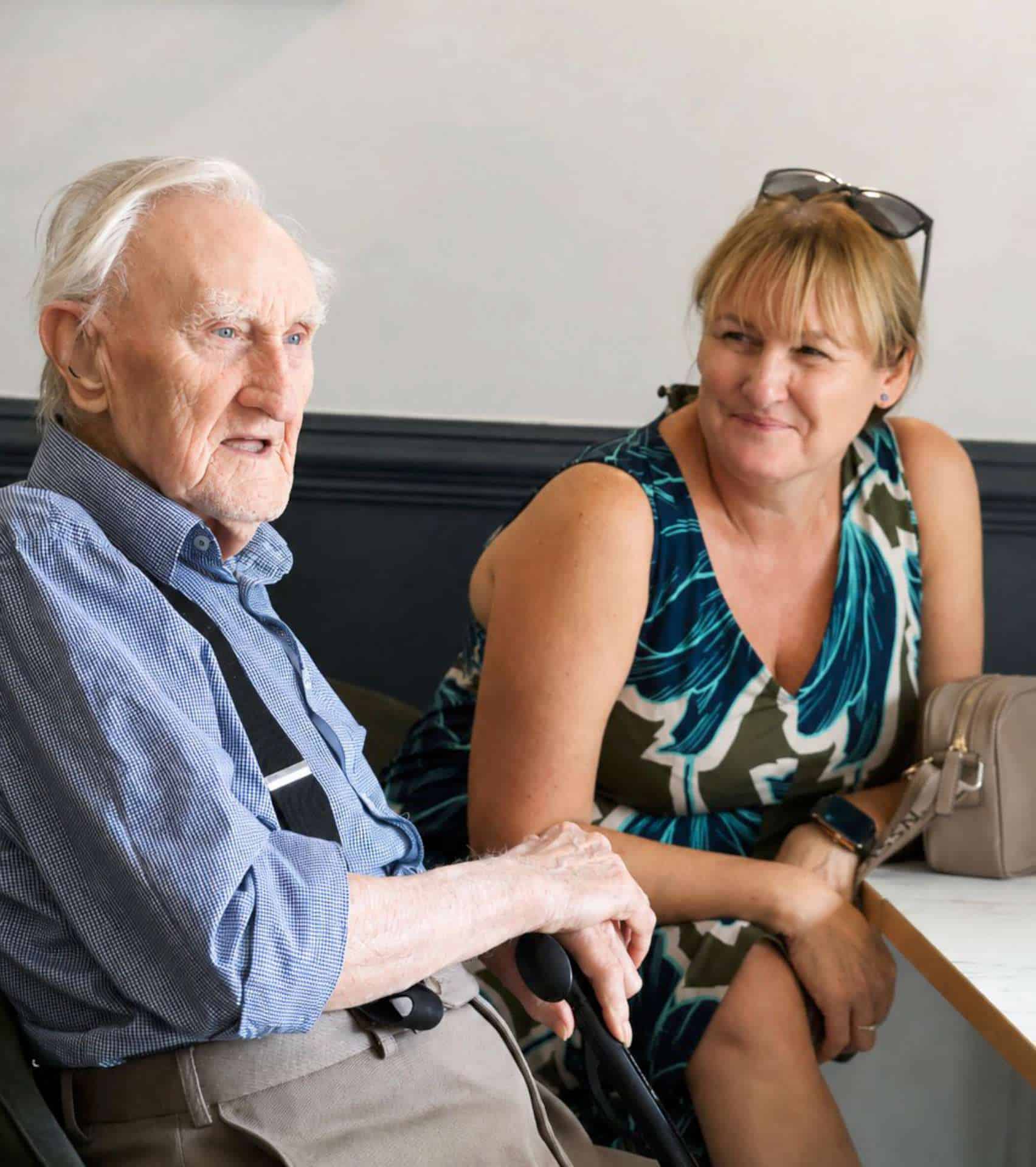
Dementia affects people in different ways. Changes may involve memory, language, judgement, mood, perception, mobility or the ability to complete familiar tasks. These changes can be frightening for the individual and difficult for relatives to understand, but a diagnosis does not remove the person’s identity, rights or need to be included.
Good dementia care is not about doing everything for somebody. It is about understanding what they can still do, providing the right level of support and helping them remain involved in their own life for as long as possible.
Communication: slow down and look beyond words
A person living with dementia may need longer to process information or may communicate through facial expression, gesture, behaviour and changes in routine. Repeating a question more loudly may increase distress without improving understanding.
- Approach from the front, introduce yourself and use the person’s preferred name.
- Reduce background noise and speak in short, clear sentences.
- Ask one question at a time and allow enough time for an answer.
- Offer simple choices rather than open-ended or complicated questions.
- Use photographs, written words, objects or gestures where helpful.
- Notice non-verbal signs of pain, fear, hunger, thirst, fatigue or discomfort.
- Avoid arguing about facts when reassurance and redirection would be kinder and safer.
Capacity is about the particular decision
Dementia does not automatically mean that a person lacks mental capacity. Capacity is assessed in relation to a specific decision at the time it needs to be made. A person may be able to decide what to eat or wear while needing more support with a complicated financial or medical decision.
The starting point must be that the person can decide unless it is established otherwise. They should receive all practicable support to understand, retain, weigh and communicate the relevant information. A decision that others consider unwise is not, by itself, evidence of incapacity.
When a change may be a health or safeguarding concern
Sudden confusion, withdrawal, agitation or reduced communication should not automatically be attributed to dementia. Infection, dehydration, constipation, pain, medication effects, stroke and other illnesses can cause rapid change and may require urgent medical assessment.
Families and care staff should also remain alert to unexplained injuries, missing money, fear around particular people, neglect, changes in home conditions or somebody else controlling access to care. It is not necessary to prove abuse before asking for advice or raising a concern.
How East Coast Care puts this into practice
East Coast Care provides enhanced dementia training alongside Mental Capacity Act and safeguarding training. Care and support workers learn the person’s life history, preferences, communication and usual presentation so that care remains person-centred and changes can be recognised early.
Continuity is actively considered when rotas are prepared. Familiar staff can reduce anxiety and are often more able to recognise subtle signs that somebody is unwell or distressed.
Our managers monitor local safeguarding themes and work with an external safeguarding consultant who provides training, specialist advice and an additional speaking-up route for staff. We contact adult safeguarding professionals for advice and work collaboratively with families, social workers and clinicians when concerns arise.
We have experienced situations in which a person with dementia could not clearly describe symptoms of serious illness. Calm observation, professional curiosity and proportionate escalation ensured emergency assessment took place. This experience reinforces why behaviour must be considered as communication and why relatives’ and familiar staff members’ observations matter.
Useful support and safeguarding contacts
Alzheimer’s Society: Guidance on communicating with a person who has dementia.
Alzheimer’s Society: Information about assessing mental capacity when a person has dementia.
Suffolk County Council: Raise an adult safeguarding concern online. For immediate danger call 999.
Suffolk Adult Social Care – Customer First: For urgent adult social-care concerns; outside office hours the number diverts to the Emergency Duty Service. 0800 917 1109